Last modified: Jan 31 2026 at 10:09 PM • 6 mins read
Why Do You Need Non-Linear Activation Functions?
Table of contents
- Introduction
- The Experiment: What if We Use Linear Activation?
- The Problem: Collapsing to Linear Regression
- What About Deep Networks?
- Mixed Activation Functions
- Why Non-Linearity is Essential
- The One Exception: Regression Output Layer
- Summary of Rules
- Complete Example: Housing Price Prediction
- Key Takeaways
Introduction
We’ve learned about various activation functions like ReLU, tanh, and sigmoid. But why do we need them at all? Why not just use linear functions (or no activation function)? Let’s explore why non-linear activation functions are essential for neural networks to work.
The Experiment: What if We Use Linear Activation?
Linear (Identity) Activation Function
Consider using a linear activation function:
\[g(z) = z\]This is also called the identity activation function because it simply outputs whatever is input.
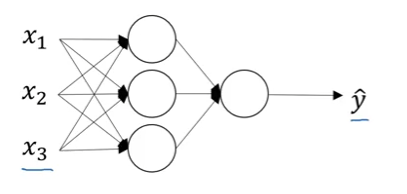
Let’s apply this to our 2-layer neural network:
\[z^{[1]} = W^{[1]} x + b^{[1]}\] \[a^{[1]} = g(z^{[1]}) = z^{[1]} \quad \text{(linear activation)}\] \[z^{[2]} = W^{[2]} a^{[1]} + b^{[2]}\] \[a^{[2]} = g(z^{[2]}) = z^{[2]} \quad \text{(linear activation)}\] \[\hat{y} = a^{[2]}\]Seems reasonable, right? Let’s see what actually happens…
The Problem: Collapsing to Linear Regression
Mathematical Proof
Let’s substitute $a^{[1]} = z^{[1]}$ into the equation for $z^{[2]}$:
Step 1: Hidden layer output
\[a^{[1]} = z^{[1]} = W^{[1]} x + b^{[1]}\]Step 2: Output layer computation
\[a^{[2]} = z^{[2]} = W^{[2]} a^{[1]} + b^{[2]}\]Step 3: Substitute $a^{[1]}$ from Step 1
\[a^{[2]} = W^{[2]} (W^{[1]} x + b^{[1]}) + b^{[2]}\]Step 4: Distribute $W^{[2]}$
\[a^{[2]} = W^{[2]} W^{[1]} x + W^{[2]} b^{[1]} + b^{[2]}\]Step 5: Simplify by defining new parameters
Let:
- $W’ = W^{[2]} W^{[1]}$ (matrix multiplication)
- $b’ = W^{[2]} b^{[1]} + b^{[2]}$
Then:
\[a^{[2]} = W' x + b'\]The Devastating Result
\[\hat{y} = W' x + b'\]This is just linear regression! The neural network with a hidden layer is computing exactly the same function as a model with no hidden layers at all.
Key insight: The composition of two linear functions is itself a linear function. No matter how many hidden layers you add, if all activations are linear, the entire network is equivalent to a single linear transformation.
What About Deep Networks?
Many Layers, Same Problem
Even with 10, 100, or 1000 hidden layers, if all use linear activation:
\[a^{[L]} = W^{[L]} W^{[L-1]} \cdots W^{[2]} W^{[1]} x + b'\]This simplifies to:
\[a^{[L]} = W_{\text{combined}} x + b_{\text{combined}}\]Result: Still just linear regression, regardless of depth!
Hidden Layers Become Useless
With linear activations:
- Adding hidden layers provides no benefit
- The network cannot learn complex patterns
- You might as well use simple linear regression
Mixed Activation Functions
Linear Hidden + Sigmoid Output
What if we use linear activation in hidden layers but sigmoid at the output?
\[a^{[1]} = W^{[1]} x + b^{[1]} \quad \text{(linear)}\] \[a^{[2]} = \sigma(W^{[2]} a^{[1]} + b^{[2]}) = \sigma(W' x + b')\]Result: This is just logistic regression without any hidden layer! The model is no more expressive than standard logistic regression.
Why Non-Linearity is Essential
Breaking the Linear Composition
Non-linear activation functions like ReLU, tanh, or sigmoid break the chain of linear compositions:
\[a^{[1]} = \text{ReLU}(W^{[1]} x + b^{[1]})\] \[a^{[2]} = \text{ReLU}(W^{[2]} a^{[1]} + b^{[2]})\]Now the composition is non-linear, allowing the network to:
- Learn complex decision boundaries
- Approximate any function (universal approximation theorem)
- Extract hierarchical features
- Benefit from depth
Visual Intuition
Linear Network (useless):
Input → Linear → Linear → Linear → Output
  x  →   Wx+b →  Wx+b →  Wx+b → W'x+b'  (collapsed!)

Non-Linear Network (powerful):
Input → ReLU → ReLU → ReLU → Output
  x  →  max(0,Wx+b) → (non-linear) → complex function
The One Exception: Regression Output Layer
When Linear Activation is Acceptable
There is one place where linear activation makes sense: the output layer for regression problems.
Scenario: Predicting continuous real values (e.g., housing prices)
\[y \in (-\infty, \infty) \quad \text{or} \quad y \in [0, \infty)\]Example Architecture:
# Hidden layers: Use non-linear activations
Z1 = np.dot(W1, X) + b1
A1 = relu(Z1)                    # Non-linear!

Z2 = np.dot(W2, A1) + b2
A2 = relu(Z2)                    # Non-linear!

# Output layer: Linear activation for regression
Z3 = np.dot(W3, A2) + b3
A3 = Z3                          # Linear (or identity)
Why this works:
- Hidden layers use non-linear activations (ReLU, tanh, etc.)
- They extract complex features
- Output layer uses linear activation to produce any real number
Alternative for Non-Negative Outputs
For predictions that should be non-negative (e.g., housing prices ≥ 0):
# Output layer: ReLU for non-negative values
Z3 = np.dot(W3, A2) + b3
A3 = relu(Z3)                    # Ensures y_hat ≥ 0
Summary of Rules
Hidden Layers
| Activation | Use in Hidden Layers? |
|---|---|
| Linear (identity) | ❌ Almost never (except rare compression cases) |
| ReLU | ✅ Default choice |
| Leaky ReLU | ✅ Good alternative |
| tanh | ✅ Sometimes useful |
| Sigmoid | ❌ Rarely recommended |
Output Layer
| Problem Type | Output Activation |
|---|---|
| Binary classification | Sigmoid |
| Multi-class classification | Softmax |
| Regression (any real value) | Linear (identity) |
| Regression (non-negative) | ReLU or Linear |
Complete Example: Housing Price Prediction
Problem Setup
- Input: Features like square footage, bedrooms, location
- Output: Price (continuous, non-negative)
Correct Architecture
# Layer 1: Non-linear activation
Z1 = np.dot(W1, X) + b1
A1 = relu(Z1)                    # ✅ Non-linear

# Layer 2: Non-linear activation
Z2 = np.dot(W2, A1) + b2
A2 = relu(Z2)                    # ✅ Non-linear

# Output layer: ReLU for non-negative prices
Z3 = np.dot(W3, A2) + b3
A3 = relu(Z3)                    # ✅ Ensures price ≥ 0

y_hat = A3
Wrong Architecture (Don’t Do This!)
# Layer 1: Linear activation
Z1 = np.dot(W1, X) + b1
A1 = Z1                          # ❌ Linear (useless!)

# Layer 2: Linear activation
Z2 = np.dot(W2, A1) + b2
A2 = Z2                          # ❌ Linear (useless!)

# Output layer: Linear
Z3 = np.dot(W3, A2) + b3
A3 = Z3                          # ❌ Entire network collapses to W'x + b'

y_hat = A3  # This is just linear regression!
Key Takeaways
- Linear activations are useless in hidden layers - they collapse the network to linear regression
- Composition of linear functions is linear - $W^{[2]}(W^{[1]}x + b^{[1]}) + b^{[2]} = W’x + b’$
- Non-linearity is essential for neural networks to learn complex functions
- Hidden layers must use non-linear activations (ReLU, tanh, Leaky ReLU, etc.)
- Output layer can use linear activation for regression problems with unbounded outputs
- Even with 1000 layers, all-linear activation = simple linear regression
- Breaking the linear chain with non-linearity enables deep learning’s power
- Universal approximation theorem requires non-linear activations to work
- Use ReLU for non-negative regression outputs (e.g., prices, quantities)
- Exception is rare: Linear activations in hidden layers are only used in special compression scenarios